

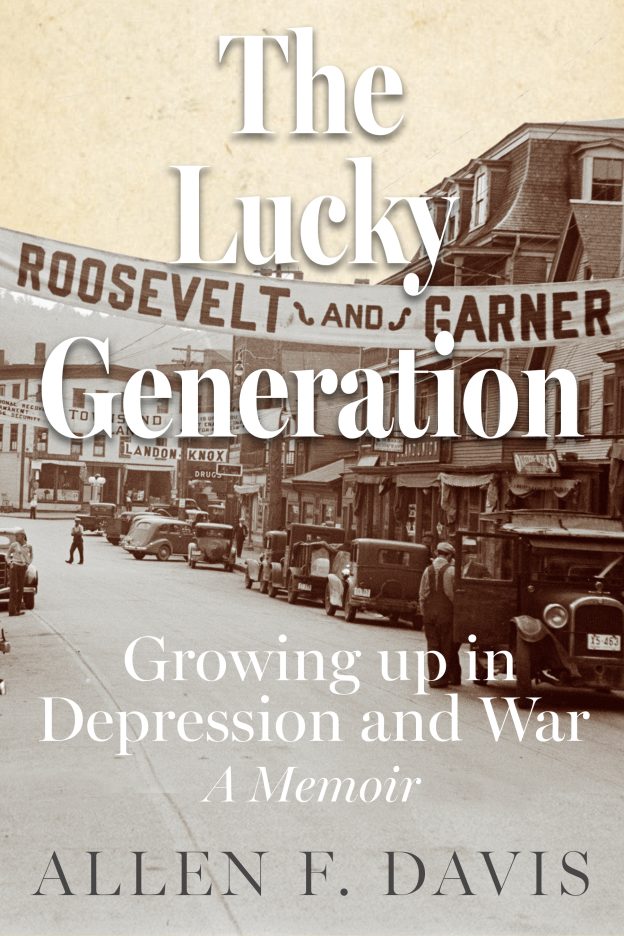
The Lucky Generation: Growing up in Depression and War; a Memoir is a book about memory and history and about the way they intersect and sometimes conflict. It is about growing up in the 1930s and ’40s in Hardwick, a small town in Northern Vermont, caught between the old ways and the emerging modern world. It contains both a provincial story and a universal experience; a personal story and the story of a generation. This is a book about food and material culture, movies and radio, dancing and baseball. Finally, it is about breaking away from small-town ways into a world shaped by Depression and War.
Advance Praise for The Lucky Generation
“Hardwick, a rural, northern Vermont town of about 2,700 people in the throes of The Depression, was where and when Allen Davis grew up. His memoir, The Lucky Generation, focuses on his first 10-15 years. The book is a delightful, detailed story that draws out the strength of family and community, which gave him the foundation he needed to venture into the world and to return with comfort and knowledge the lessons of his youth remain relevant today. The book is a pleasure to read.”
—Ross Connelly, Editor & Co-publisher The Hardwick Gazette, 1986-2017
“An absorbing account of one boy’s growing up, filled with fascinating details of small-town life. Because of the depth of detail, The Lucky Generation will endure as a valuable contribution to the historical record of twentieth-century Vermont.”
—Dona Brown, Emerita Professor of History, University of Vermont
“Twice this book scores major successes. Not only does Allen F. Davis depict the generational experience of being a lad during the Great Depression and World War II, he also provides the best account of a small-town Vermont boyhood since Robert L. Duffus of the New York Times wrote his two coming-of-age classics: Williamstown Branch (1958) and Waterbury Record (1959). Move over Rob Duffus and make space for Allen Davis from Hardwick, Vermont.”
—Charles T. Morrissey, Oral Historian and former
Director of the Vermont Historical Society
“A master storyteller, Allen Davis teaches us that every life, every memory, and every object is a portal to the American past. His story invites us into the experience of growing up in small town Vermont, revealed with keen insight into the currents of American history that shaped the rising generation of the Great Depression and World War II.”
—Charlene Mires, Professor Emerita of History, Rutgers-Camden
“Allen Davis’ idyllic Vermont boyhood vividly captures an aspect of America that most of us only imagine. Like the objects, photographs, and memories it brings to life, this book is a treasure.”
—Alice Kessler-Harris, R. Gordon Hoxie Professor of History,
Emerita, Columbia University, author of A Difficult Woman:
The Challenging Life and Times of Lillian Hellman
About the Author
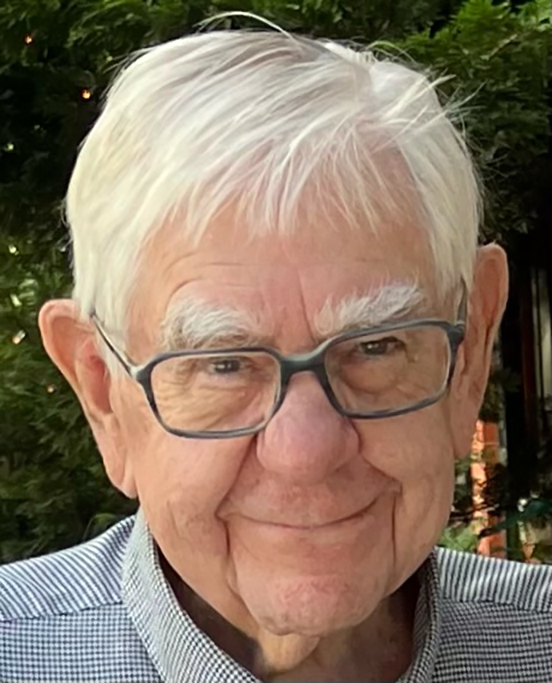 Allen Freeman Davis was born and grew up in Hardwick, Vermont. His parents owned the general store his grandfather built. He graduated from Hardwick Academy in 1949, and from Dartmouth College in 1953. He earned an MA from the University of Rochester and a Ph.D. in American Intellectual History from the University of Wisconsin in 1959. He is the author or editor of a dozen books including American Heroine: The Life and Legend of Jane Addams, Still Philadelphia: A Photographic History, Generations: Your Family in Modern America History, and Postcards From Vermont. He taught American History at the University of Missouri and Temple University in Philadelphia. He was visiting professor at the University of Texas, and he held the John Adams Chair in American Civilization at the University of Amsterdam. He has lectured widely in the United States, Europe, and Asia. He is an elected member of the Society of American Historians, and the former president of the American Studies Association. He lives in Philadelphia, but he spends summers at the Davis family camp on Caspian Lake in Greensboro, Vermont, only seven miles from where he was born.
.
In his own words:
“I grew up during Depression and War and that had a great impact on my generation. I lived in a large Victorian house at South Main and Summer Streets across from the cemetery and in the shadow of Buffalo Mountain. It was my only house until I went to college. My father owned a general store on South Main Street at the top of Plank Hill. My grandfather, Charles F. Davis (1864-1951), purchased the store in 1902. My father graduated from Hardwick Academy in 1914. My mother graduated from Craftsbury Academy in 1913 and the University of Vermont in 1917. She taught Latin and English at Hardwick Academy from 1918 to 1924. She also served on the Hardwick School Board for nearly thirty years. I had two sisters, Florence (1926-) and Marjorie (1934-1965). Like many of my friends in Hardwick, my family had a grandmother living with us. In my case, she was my mother’s mother, Lola Wylie Allen (1858-1940), and she died when I was nine. My grandfather and his second wife, Sarah Holton Davis (1867-1957), lived only a few houses away.
“I entered first grade in 1937 (there was no kindergarten in Hardwick) and for twelve years I went to school in the same building. We all walked home for dinner at noon (there was no concept of lunch in Hardwick). I was in the fourth grade when the attack on Pearl Harbor catapulted the United States into World War II. I was in the eighth grade when the war ended in Europe. In High School we had some good and some inadequate instructors as well as two great teachers. Leone Cobb and Chandler Mosher taught us how to write and inspired us to go to college. There were twenty-three in my graduating class in 1949, and twelve went to college. Because it was a small school there were opportunities to participate in a variety of activities. I played basketball, football, and baseball (but I never could hit a curve ball.) I sang in the glee club (though I could not sing,) and acted in plays (though I had no talent). I wrote for the yearbook and the school newspaper.
“I spent a great deal of time in the Jeudevine Memorial Library and the Idle Hour Theater, and both places stimulated my imagination and influenced my dreams. In the library I hid out on the balcony and read whatever was on the shelves – biography, fiction, and history. I went to the theater at least once a week and usually more than once. Often there was a double feature as well as a cartoon, a serial, and a newsreel. I also spent many hours in the “New Gym” which was completed in 1940. I went there not only for basketball, but also for dances, lectures, graduation exercises, plays, and even movies. I also spent time at the United Church on South Main Street, not only for religious services but also for church suppers and young peoples’ meetings that included lectures and folk dancing. The United Church was a liberal protestant church. The Catholic Church was across the street. There was tolerance, but little cooperation. My family was Congregational and Republican by conviction and habit. I outgrew both within a decade after I left town. Hardwick was a declining granite town while I was growing up. There was some conflict and prejudice but there was also a real sense of community.
“I graduated from Dartmouth College in 1953, earned a Masters Degree in History from the University of Rochester in 1954, and a Ph.D. in History at the University of Wisconsin in 1959. I served two years in the Army, as most men of my generation did, but because of student deferments, the Korean War was over before I was drafted. I taught American Cultural History and American Studies in several American Universities and lectured widely in the United States, Europe, and Asia. I have written or edited more than a dozen books and many articles.
“I contribute regularly to The Hazen Road Dispatch, a publication of the Greensboro Historical Society, and the Hardwick Historical Society Journal. I live in Philadelphia, but I return each summer to the family camp on Caspian Lake built by my grandfather in 1923 on land purchased by my grandmother, Florence Haines Davis (1864-1923), in 1913. And I return each year to Hardwick.”
SPECS
The Lucky Generation: Growing up in Depression and War; a Memoir
Nonfiction
Paperback Original with B&W photo section
Trim Size: 6 x 9
Page Count: 260
Price: $24.95 (CA $36.95)
ISBN: 979-8-9923988-0-9
Publication Date: August 12, 2025
Distributor: IPG/Chicago, Ingram, Bookshop.org
Rights sold: All rights available.
Rights & PR: Dede Cummings, dede@greenwriterspress.com
Distributor: IPG; also available through Follett/Baker & Taylor, Ingram, and other wholesalers.
Individuals can pre-order directly from Bookshop.org, or contact your local, independent bookstore.
Booksellers, libraries, colleges/universities, gift shops, etc., can order through IPG:
Independent Publishers Group
814 N. Franklin Street
Chicago, IL 60610
Order Placement: (800) 888-4741
To request an advance reader copy—digital or print—email dcdesignteamvt@gmail.com